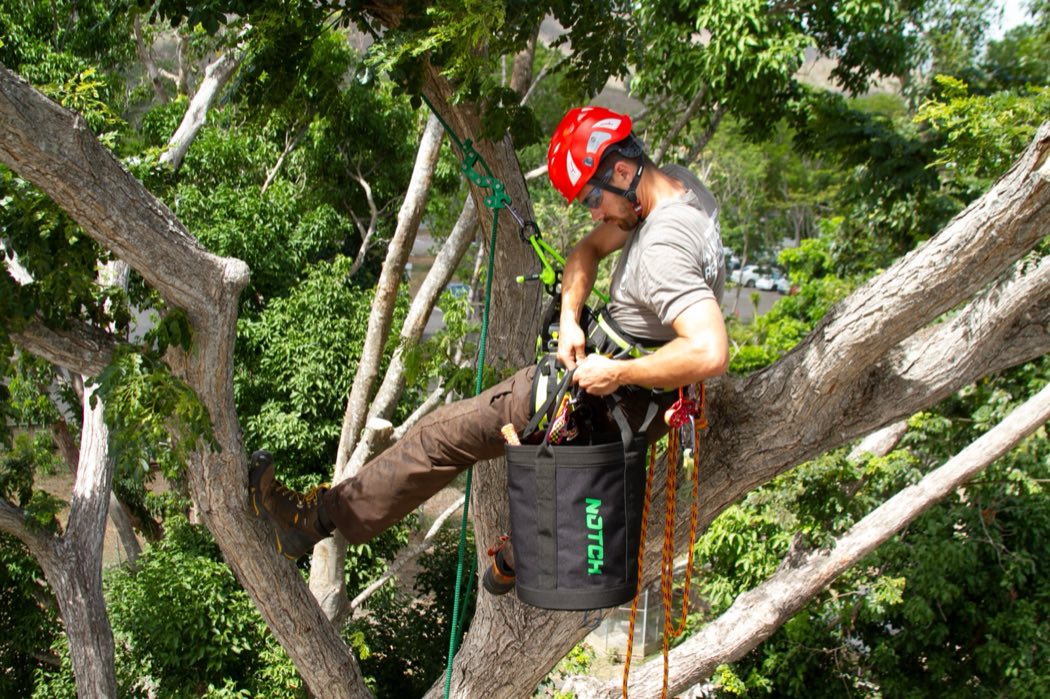
The question homeowners actually ask me is not what the four tree tiers are. It is whether they need a Seattle tree removal permit to put a cottage in their own backyard, and what it will cost. The two questions sit together, because one of them — the tier — decides whether the other one — the permit — is even possible.
Seattle's tree code, SMC 25.11, sorts every tree by its trunk size and, for a DADU, the line that matters is 24 inches. Trees under that are mostly yours to remove or protect during construction. Trees over it are not freely removable — SDCI approves removal during development only where the lot's allowed coverage cannot otherwise be met, avoiding the tree's protection area would leave the DADU under 10 ft wide, or removal is necessary for new structures, access, or utilities (SMC 25.11.070.A.1), with replacement (25.11.090) or a payment in lieu (25.11.110) — so the cottage usually has to be designed around them.
This piece covers the part the tier articles skip: the permit process, the fee schedule, and the arborist report. For the full tier-by-tier breakdown of what each tier means and how a root protection area moves a building, read our Seattle tree ordinance tiers guide.
The permit is the easy part. The arborist report is the expensive part. The mistake is paying for either before you know which trees are even regulated.
Which trees can actually block a Seattle DADU
Not every tree is in the way. The code reads the trunk — diameter at standard height, or DSH, measured 4.5 feet off the ground — not the canopy, and sorts from there.
| Tier | Trunk (DSH) | For a DADU |
|---|---|---|
| Tier 1 | Designated heritage trees | Must be protected; removal only if hazardous or emergency |
| Tier 2 | 24 in or greater, plus groves and listed species | Removable during development only for coverage/width/construction (25.11.070), with replacement or payment in lieu |
| Tier 3 | 12 to under 24 in | Removable or protected at your option; replacement required |
| Tier 4 | 6 to under 12 in | Removable or protected at your option |
| Other | Under 6 in | Not regulated |
Source: SMC Chapter 25.11 and SDCI's tier summary. A few species below 24 inches count as Tier 2 under Director's Rule 7-2024, which is why a species check matters, not just a tape measure.
The one-inch gap between a 23-inch Douglas fir and a 24-inch one is the whole story. Below the line, the tree is a decision you make. Above it, the tree is a condition you design around — and the expedited pre-approved plan path can collapse on a single Tier 2 tree, because those plans assume a clean rear yard. The full tier and root-protection detail is in the tree ordinance guide.
The tree and critical-area pre-check screens your Seattle parcel's canopy and the mapped critical areas around it, before you commission an arborist report you may not need.
When you need a Seattle tree removal permit — and what it costs
SDCI's Tree Removal page is blunt about the logic: the protection requirements vary by tier, species, whether construction is occurring or proposed, and the zoning. If you remove a protected tree unlawfully, the penalties are expensive. The fee schedule is a flat multiple of the Land Use hourly rate, set by the type of request, and it is charged when you apply. Dead trees, ADA or elderly access, and invasive or nuisance removal carry no Land Use fee. Almost everything else is half the hourly rate; a vegetation restoration is the full rate.
SDCI tree-removal fees by request type
The Land Use fee is a multiple of the hourly Land Use rate, charged at application. Several request types carry no Land Use fee.
Source: SDCI's Tree Removal page, "How Much Does It Cost?" Additional SDCI fees may apply in environmentally critical areas. The Land Use rate changes, so check the current Fee Subtitle.
Notice what is missing from that table: "I want the tree gone so the cottage fits." There is no such line item, because for a Tier 2 tree that is not how it works. You either design around it or make a capacity argument under SMC 25.11.070 — and that argument runs through the arborist.
The tree removal permit process, step by step
For a DADU, most tree removal rides along inside the building permit — SDCI reviews tree removal tied to construction through the record that authorizes the construction. When you need approval outside of development, the path is a separate application called Tree Removal and Vegetation Restoration, filed through the Seattle Services Portal. Either way the sequence is the same three moves.
-
Research the tree first
Determine the tier, the species, and whether the tree sits in an environmentally critical area. SDCI's Tip 242B walks through private-property tree removal, and Director's Rule 7-2024 lists the species that count as Tier 2 below 24 inches. If the tree is in a mapped critical area, Tip 331B on hazard trees applies.
-
File the application with the right paperwork
The application requires a Statement of Financial Responsibility, a site plan, an arborist report if one applies, a Basic Tree Risk Assessment form if a risk assessment is needed, and photos of the tree.
-
Get approval, then hire a registered provider
SDCI aims to finish the initial review within two weeks. Final approval depends on corrections. All the cutting then has to be done by a provider on the Tree Service Provider Registry, with a public notice posted ahead of time.
Two weeks for a first look is fast by permit standards, but it assumes you brought the right paper. The arborist report is the document that decides most of these applications, which is why it deserves its own section.
When the arborist report is required — and what it costs
The arborist report is the one line most homeowners did not budget, and it is the one that usually decides whether the tree stays. The report identifies each regulated tree near the build area, tiers it by DSH, assesses condition, and draws the protection area the foundation and trenching must stay outside of. SDCI lists it as a required submittal "if applicable," which in practice means: whenever a Tier 2 or Tier 3 tree is near the footprint, or the work is inside a critical area.
On cost, plan for $400–$1,200 for an arborist report that tiers every regulated tree on the lot and draws their protection areas. Those are planning estimates, not quotes — the number moves with how many trees and how much of the site they touch. The point is the sequencing: a report is only worth buying if a regulated tree is actually in the way.
I have watched too many homeowners write a $1,200 arborist check for a lot that had no regulated tree on it — and a few more skip the report on a lot that had three. Know which trees are regulated before you pay anyone to look at them.
A free height screen before the arborist arrives
Height is a rough proxy for trunk size. A tree 60 feet or taller is likely Tier 2; only the arborist's DSH measurement at 4.5 feet sets the legal tier.
Height proxies from the City's 2021 tree crown LiDAR, as used in our tree analysis. The legal tier comes from the arborist's DSH measurement; a species check against Director's Rule 7-2024 matters too.
You can do that screen yourself in an afternoon with the City's 2021 canopy data and a good eye — walk the lot, and if anything pushes 60 feet, treat that corner as occupied until proven otherwise. Then bring in the arborist, and only if the tree is actually near where the cottage goes. The order matters more than the report.
Trees inside a critical area change the rules
If the tree sits in a mapped environmentally critical area — a steep slope, a landslide zone, a peat deposit — the tree conversation becomes an ECA conversation, and SDCI's Tip 331B on hazard trees applies on top of everything else. That is where the permit gets slower and the geotechnical question enters. It is also exactly where the pre-approved standard plan path breaks, because an ECA on the property disqualifies it.
We cover the ten critical-area designations and their consequences separately in our ECA guide. For trees, the takeaway is shorter: a tree in an ECA is not a simple removal — it is a land-use question, and you want to know it is there before you spend on design.
The $39 Tree & Critical-Area Pre-Check maps the tree crowns on and around your parcel and flags the likely tiers and ECA hits — so you know if an arborist or geotech is even needed.
Where the trees are in Seattle — and where they are not
How much this matters depends on your block. Tree canopy is measured from City of Seattle open data, from a low of 16.4% in Beacon Hill to 33.7% in Fauntleroy & Seaview. In the heavy-canopy half of town, assume the Tier 2 question is on the table from day one.
That is why the neighborhood matters as much as the tree. Wedgwood & View Ridge and Ravenna & Bryant combine big lots with heavy canopy — space to build, but trees you may not be allowed to remove. Seward Park and Fauntleroy & Seaview are the same trade at the south end. Beacon Hill is the rare place where trees are usually not the binding constraint. The full neighborhood profiles show the measured patterns.
If you want the answer for your own address, the customized feasibility report measures the canopy on and around your parcel and flags the trees likely to be regulated before you spend on design or permits. For a first pass without a full report, the free homeowner checklist covers the same ground.
Frequently asked questions
Do I need a permit to remove a tree on my Seattle lot to build a DADU?
It depends on the tree's tier, species, and whether you are building. Trees under 6 inches DSH are not regulated. Tier 3 and Tier 4 trees may be removed or protected at your option during development, with replacement required for Tier 3. A Tier 2 tree is not freely removable — SDCI approves removal during development only where coverage, width, or construction requires it (SMC 25.11.070.A.1), with replacement or a payment in lieu. Tree removal tied to construction is reviewed through the SDCI record authorizing the construction; removal outside development goes through the Tree Removal and Vegetation Restoration application.
What does a Seattle arborist report cost for a DADU?
A planning estimate is roughly $400–$1,200 for an arborist report that tiers every regulated tree and draws their protection areas. The report is a permit submittal only when a regulated tree is near the footprint or the work is in a critical area.
Can I remove a Tier 2 tree to build a DADU in Seattle?
Generally no. A Tier 2 tree may be removed only if it is hazardous, needs emergency action, or SDCI approves removal to reach allowed development capacity under SMC 25.11.070 — and then only the minimum number of trees needed. Removing a protected tree without approval can carry a civil penalty of up to three times its appraised value.
How can I find out which of my trees are regulated before paying an arborist?
Start with a free height screen: 60 feet or taller is likely Tier 2, around 35 feet is likely Tier 3, around 20 feet is a possible Tier 4. Estimate against the City's 2021 tree crown survey, or run a tree pre-check that maps the crowns on and around your parcel. Only an ISA-certified arborist's trunk measurement sets the legal tier.
The Seattle DADU Pro Guide walks through the full tree-tier rules, replacement requirements, and permit roadmap in one place. Before you license a plan or write an arborist a check, run the Tree & Critical-Area Pre-Check ($39) on your address — or the full customized feasibility report for the complete buildable-envelope picture.
This article is educational and preliminary. It is not legal advice, architectural advice, engineering advice, or an official determination by the City of Seattle. Tree tiers, permit requirements, and fees change. Verify all findings against current SDCI and SDOT guidance at the time of your application, and have an ISA-certified arborist confirm the tier of any tree near your build area.