
A Seattle tree ordinance DADU review starts the same way every job of mine did: with the tree tiers, not the floor plan. SMC 25.11 — Seattle's tree protection code — sorts every tree on your lot into four tiers, and one of those tiers decides whether your cottage goes where you drew it or nine feet to the left. Nothing else on a rear-yard job reshapes a footprint that fast.
Zoning tells you the cottage is allowed. Setbacks tell you roughly where the rectangle can sit. Trees tell you it cannot sit there after all. So much of Seattle's detached-housing stock sits under real canopy that this is not an edge case — it is the normal case in Wedgwood, Ravenna, and most of West Seattle.
Here is the whole thing, plain: the four tiers, what a root protection area actually is, why a 24-inch trunk is the number that moves buildings, the Registered Tree Service Provider and public-notice rules, the fines, and the street trees people forget until the trenching crew is in the yard.
You cannot treat your own tree as yours to cut. In Seattle, a tree with a 24-inch trunk is a Tier 2 tree, and it is protected the day you sign for the lot.
How the Seattle tree ordinance DADU tiers work
Seattle stopped talking about "exceptional" and "non-exceptional" trees in 2023. The new code replaced them with four tiers, measured by diameter at standard height — DSH, the industry measurement of the trunk 4.5 feet off the ground. The tiers, straight from SDCI's published summary of the code:
| Tier | What it is | For a DADU |
|---|---|---|
| Tier 1 | Designated heritage trees | Must be protected; removal only if hazardous or an emergency |
| Tier 2 | 24 in DSH or greater, plus tree groves and listed species (DR 7-2024) | Removable during development only for coverage/width/construction (25.11.070), with replacement or payment in lieu |
| Tier 3 | 12 to under 24 in DSH | Removable or protected at your option; replacement required |
| Tier 4 | 6 to under 12 in DSH | Removable or protected at your option |
| Other | Under 6 in DSH | Not regulated by SMC 25.11 |
Source: SMC Chapter 25.11 and SDCI's tree tier summary. A handful of species below 24 inches count as Tier 2 under Director's Rule 7-2024, which is why a species check matters, not just a tape measure.
Notice where the line falls. A 23-inch Douglas fir is Tier 3 and can come out during development. A 24-inch one is Tier 2, and the conversation changes entirely. One inch of trunk separates a tree you can remove from one you design around.
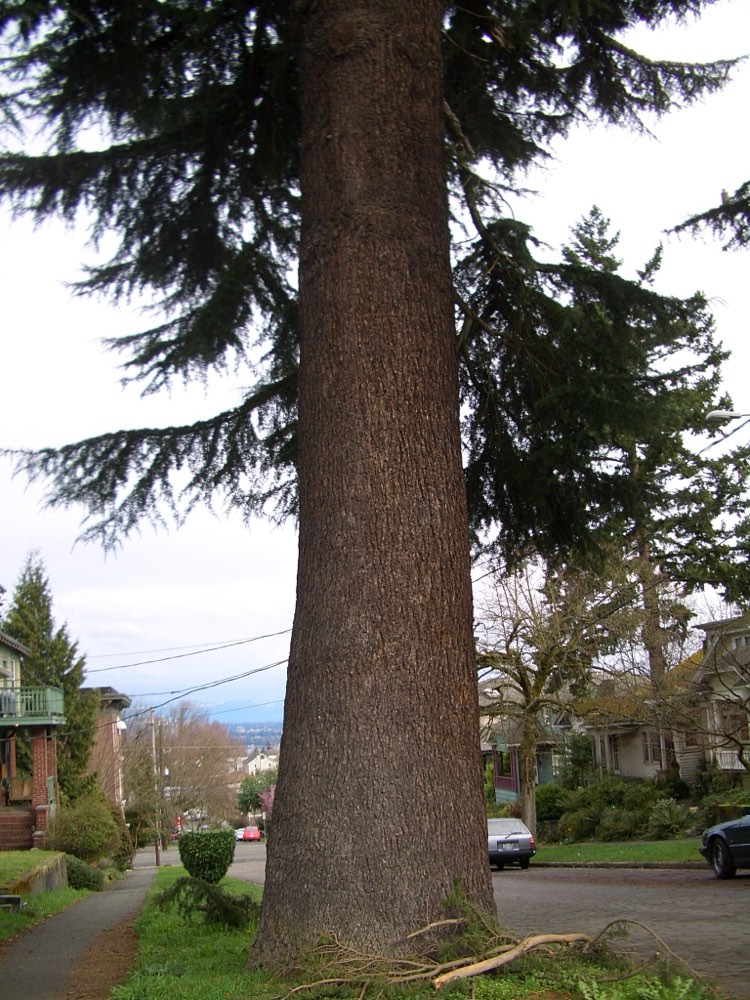
How much this matters depends on where your lot is. Tree canopy is measured block by block in the City's open data, from a low of 16.4% in Beacon Hill to 33.7% in Fauntleroy & Seaview. In the heavy-canopy half of town, assume a Tier 2 conversation is coming.
Tree canopy by Seattle neighborhood
Heaviest and lightest eight neighborhoods, measured from City of Seattle open data. Heavier canopy means more lots sitting under a Tier 2 or Tier 3 tree.
Source: measured from City of Seattle open data — Tree_Canopy_Block_Groups_2016_2021, area-weighted to each neighborhood. See the neighborhood-by-neighborhood numbers on our DADU feasibility neighborhood hub.
The tree and critical-area pre-check screens your parcel's canopy and SDCI's mapped critical areas, so you know what is regulated before you pay an arborist to measure trunks.
What a root protection area does to a cottage footprint
The phrase that actually moves your building is "tree protection area" — the circle of ground around a protected tree that SDCI says you cannot disturb. For years Seattle drew it at the drip line, the outer edge of the canopy. The current code is cleaner and, for conifers, usually bigger: SDCI now uses the trunk-diameter method, a radius of one foot for every inch of DSH.
A 30-inch cedar gets a 30-foot-radius circle around the trunk. That is the point people miss: a tall, narrow conifer can have a modest drip line but a fat trunk, so the protection circle ends up wider than the branches. On a broadleaf maple the two come out close. Either way, the arborist draws it, SDCI verifies it, and your foundation, trenching, and staging stay outside it.
A cedar's protection circle vs. a cottage footprint
Plan view of a 30-inch cedar. The dashed green circle is the 30-foot protection area from the trunk-diameter method; the bronze circle is the drip line. The cottage had to slide nine feet to clear the protected ground.
Illustration of the trunk-diameter method described on SDCI's Trees & Codes page. The arborist proposes the protection area; SDCI verifies it.
I have never once seen a homeowner budget for the tree. They budget for the plans, the permit, the sewer, the heat pump — then a 30-inch cedar in the back corner redraws the whole project in one site visit. Measure the trunks before you pay to draw anything.
Why Tier 2 trees, not Tier 3, are the ones that move your DADU
During development, Tier 3 and Tier 4 trees are mostly yours to decide on — remove them or protect them, with replacement planting required for Tier 3. Tier 2 is the different animal. A Tier 2 tree is not freely removable to build a DADU — it may be removed only if it is hazardous, needs emergency action, or SDCI approves removal under SMC 25.11.070 (where the lot's allowed coverage cannot otherwise be met, avoiding the tree would leave the DADU under 10 ft wide, or removal is necessary for new structures, access, or utilities), with replacement or a payment in lieu.
That last clause is the one that matters on a real job. SDCI compares the lot's buildable area against its allowable lot coverage and approves removal only of the minimum number of trees needed. It also treats any strip between a protection area and a setback under 10 feet wide as not buildable. On a tight NR lot, that arithmetic decides whether the cottage fits with the tree or the tree goes.
I remember a Wedgwood job where the as-built line for the cottage sat 21 feet from a cedar's trunk. The cedar was 30 inches, so the protection circle ran 30 feet. Nine feet is exactly what the cottage had to slide toward the alley to clear it — and that nine feet pushed the design from a stock footprint into a custom one. The homeowner had already licensed the plan. That is the mistake, and it costs real money. A lot-specific check before design would have caught it in an afternoon. The customized feasibility report measures the canopy, likely tree tiers, and buildable envelope for your address.
If your lot is in the heavy-canopy half of the city — Wedgwood & View Ridge, Ravenna & Bryant, Seward Park, or Fauntleroy & Seaview — assume the Tier 2 question is on the table from day one. Beacon Hill, at the light end of the range, is the rare place where trees are usually not the binding constraint.
The Registered Tree Service Provider and public-notice rules
You also cannot hand the chainsaw to any crew with a truck. SDCI keeps a Tree Service Provider Registry, open since August 2022, and all commercial tree work in Seattle must be done by a registered provider — removing any Tier 1 through Tier 4 tree, cutting live branches four inches or larger, cutting live roots two inches or larger, even the arborist consulting that assesses health or hazard.
There is a public-notice piece most homeowners have never heard of. Before any reportable work, the provider posts a notice to the SDCI website at least three full business days ahead — six full business days before a removal — and posts it on site while the work happens.
The penalty for skipping all of this is not a slap. SDCI's tree removal page points to Director's Rule 17-2018 for valuations and penalties: removing a protected tree without approval can carry a civil penalty of up to three times the tree's appraised value. A mature tree appraises in the tens of thousands. Replacement, or a payment in lieu under Director's Rule 8-2023, stacks on top.
Street trees: the SDOT permit most DADU builders forget
Everything above is about trees on your own lot. The street tree is a separate rule and a separate department. A tree in the planting strip belongs to the City, and SDOT's Trees & Landscaping group issues the permits to plant, prune, or remove it. If your DADU needs a new driveway cut or a sewer trench through the planting strip, that work runs through a tree's root zone — and SDOT's Urban Forestry permit is required on top of any SDCI tree approval.
The neighbor's tree is the quiet version of the same problem. You cannot remove a tree on the next lot, but if it is Tier 2, its protection area extends across the property line onto your yard. Your cottage foundation and trenching have to stay out of that overhanging circle too, which can shave a corner off an otherwise generous buildable area.
This is exactly the kind of site-specific question a generic article cannot answer. Our customized feasibility report maps the canopy on and around your parcel and flags the trees likely to be regulated before you pay a designer.
Estimate your tiers from height before the arborist arrives
You can do a useful first pass with nothing but your eyes and the City's 2021 tree crown survey. Height is a rough proxy for trunk size, and the LiDAR crown data gives you a starting estimate before you write the arborist a check. As a rule of thumb: a tree 60 feet or taller is likely Tier 2 (24 inches or more), around 35 feet is likely Tier 3, and around 20 feet is a possible Tier 4.
Mark that as an estimate. Height is a screen, not the legal answer. Only an arborist's trunk measurement at 4.5 feet sets the actual tier, and a species check against Director's Rule 7-2024 matters — a few species count as Tier 2 well below 24 inches. The height screen still tells you whether to redesign before anyone is on the clock.
Walk your lot, estimate the heights, and if anything pushes 60 feet, treat the back corner as occupied until proven otherwise. Then get the arborist. The order matters: pre-approved standard plans assume a clean, tree-free rear yard, and the whole expedited path can collapse on one Tier 2 tree. The broader checklist is in our 2026 homeowner checklist.
Frequently asked questions
What are the four Seattle tree tiers for a DADU?
Seattle's tree protection code, SMC 25.11, sorts trees into four tiers. Tier 1 is designated heritage trees. Tier 2 is trees 24 inches or greater in diameter at standard height (DSH), plus tree groves and species listed in Director's Rule 7-2024. Tier 3 is 12 to under 24 inches, and Tier 4 is 6 to under 12 inches. Trees under 6 inches are not regulated.
Can I remove a Tier 2 tree to build a DADU in Seattle?
Generally no — it is not freely removable. A Tier 2 tree can be removed only if it is hazardous, needs emergency action, or SDCI approves removal under SMC 25.11.070 — where the lot's allowed coverage cannot otherwise be met, avoiding the tree's protection area would leave the DADU under 10 ft wide, or removal is necessary for new structures, access, or utilities — and then only the minimum number of trees needed, with replacement or a payment in lieu. Tier 3 and Tier 4 trees may be removed or protected at your option during development, with replacement required for Tier 2 and Tier 3.
Do I need a registered tree service provider or a permit for tree work on a DADU?
Yes. All commercial tree work in Seattle must be done by a provider on SDCI's Tree Service Provider Registry, and a public notice goes up on the SDCI website at least three full business days before reportable work or six full business days before a removal. Removing a protected tree without approval can carry penalties up to three times the tree's appraised value.
How do street trees affect a Seattle DADU?
Street trees belong to the City. Planting, pruning, or removing one — or doing work in its root zone, like a new driveway cut or utility trench — needs a permit from SDOT's Urban Forestry group, on top of any SDCI tree approval for trees on your own lot. A neighbor's Tier 2 tree can also extend its protection area onto your yard.
The Seattle DADU Pro Guide walks through the full tree-tier rules, replacement requirements, and permit roadmap in one place. Before you license any plan, run the customized feasibility report on your address — it measures the canopy on and around your parcel so you know whether a Tier 2 tree is standing in the way.
Keep reading. The tiers tell you what is regulated; the Seattle tree removal permit rules for a DADU tell you what it takes to remove one and what an arborist report costs. If your lot also carries a mapped slope or wetland, Seattle critical areas and the fast DADU permit is the companion piece.
This article is educational and preliminary. It is not legal advice, architectural advice, engineering advice, surveying advice, or an official determination by the City of Seattle. Tree tiers, permit requirements, and fees change. Verify all findings against current SDCI and SDOT guidance at the time of your application, and have an ISA-certified arborist confirm the tier of any tree near your build area.