How do I find out who owned my house in Seattle?
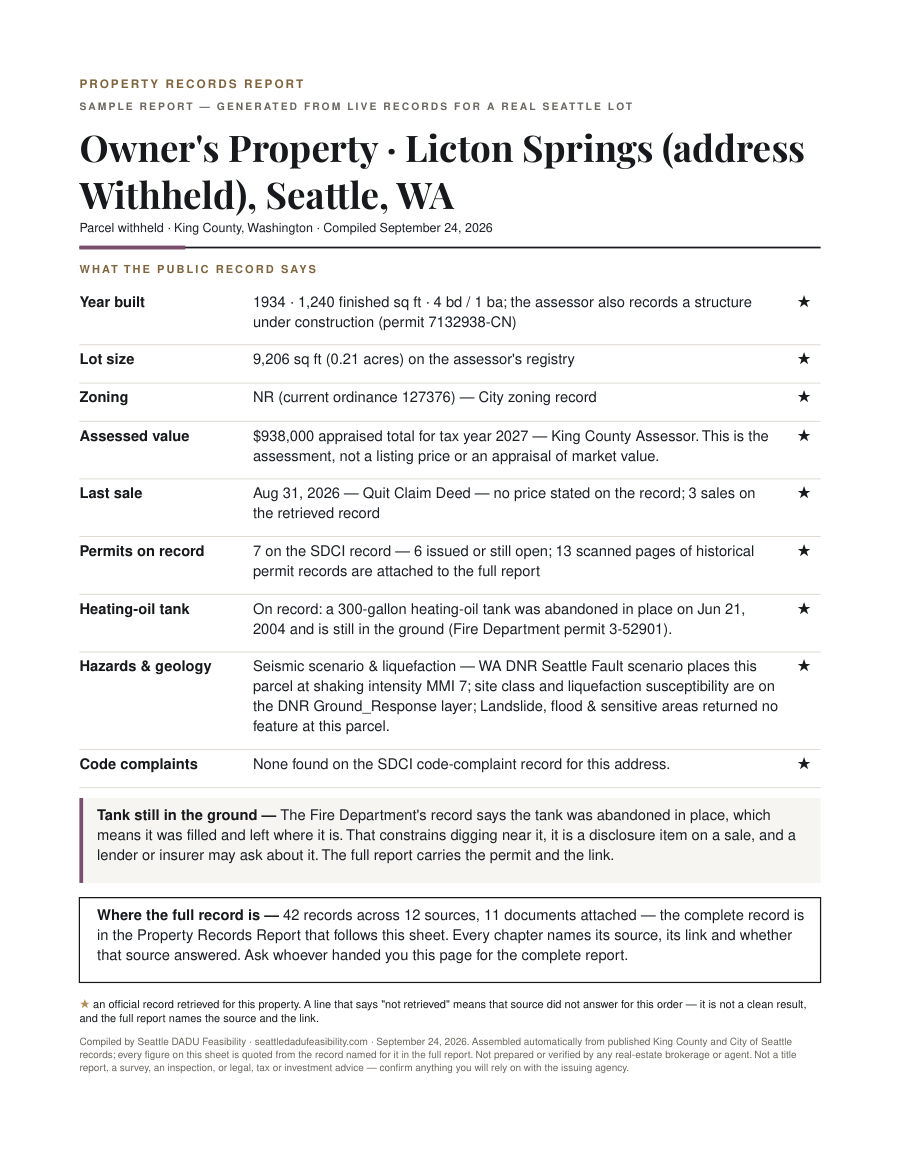
Ownership is a public record. Every sale King County has recorded for the parcel is on the Assessor's detail page, and the deed itself is held by the Recorder under its recording number. The dossier pulls the sale list, matches each sale to its recording number, and attaches the recorded deed image where the Recorder returns it — so you get the chain of owners and the documents behind it, not just names.
How do I find out when my house was built?
The King County Assessor's building record carries the year built, the finished area, the room count and the construction grade, and the dossier prints it next to the assessor's own footprint sketch and photo. Where the year built and the permit record disagree — a common thing on older Seattle houses that were remodelled — you will see both, which is the point.
Can I look up old building permits in Seattle?
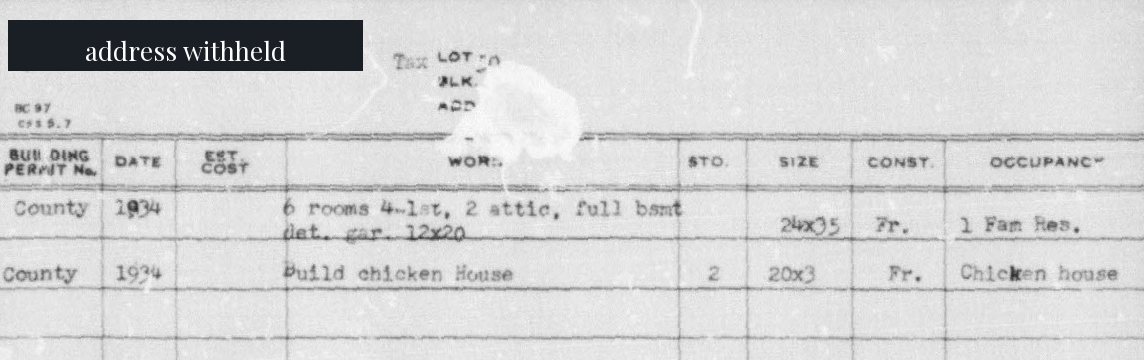
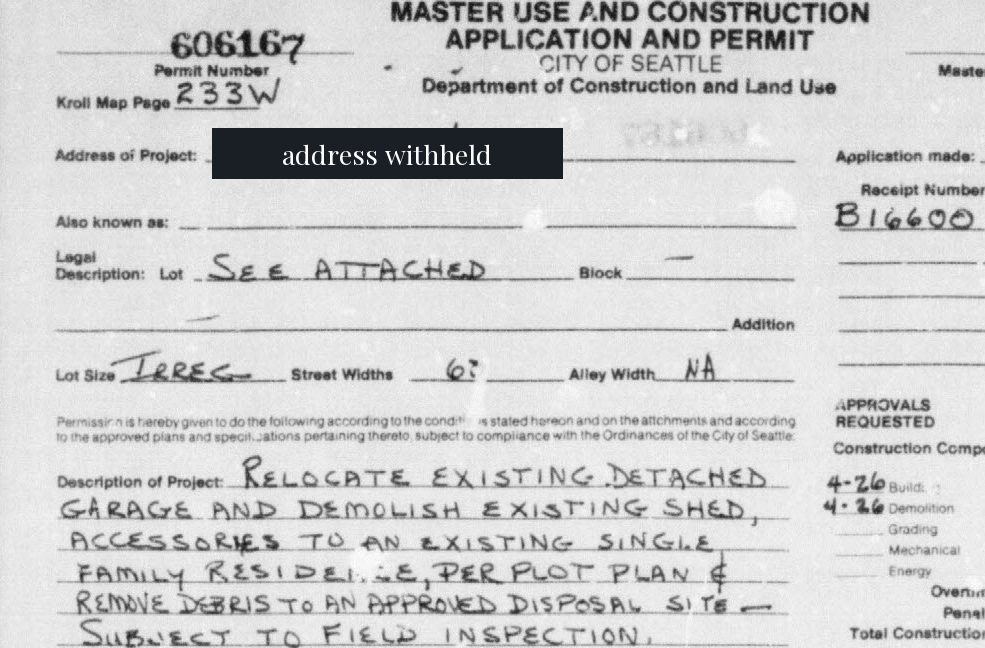
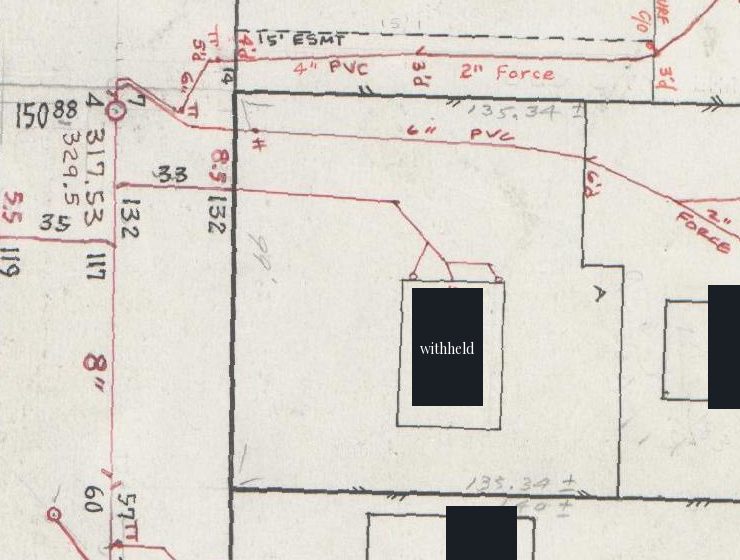
Yes, and there are two separate records. Modern permits are in SDCI's open data, with status, issue date, value and description. Permits from roughly 1894 to 1970 exist only as scanned microfilm in SDCI's Permit & Site History tool. The dossier pulls both, and attaches the microfilm scans as pages where SDCI holds them for your address — when it does, that is usually the only way to see whether a pre-war addition was ever permitted.
My house has a decommissioned oil tank. Is it still buried?
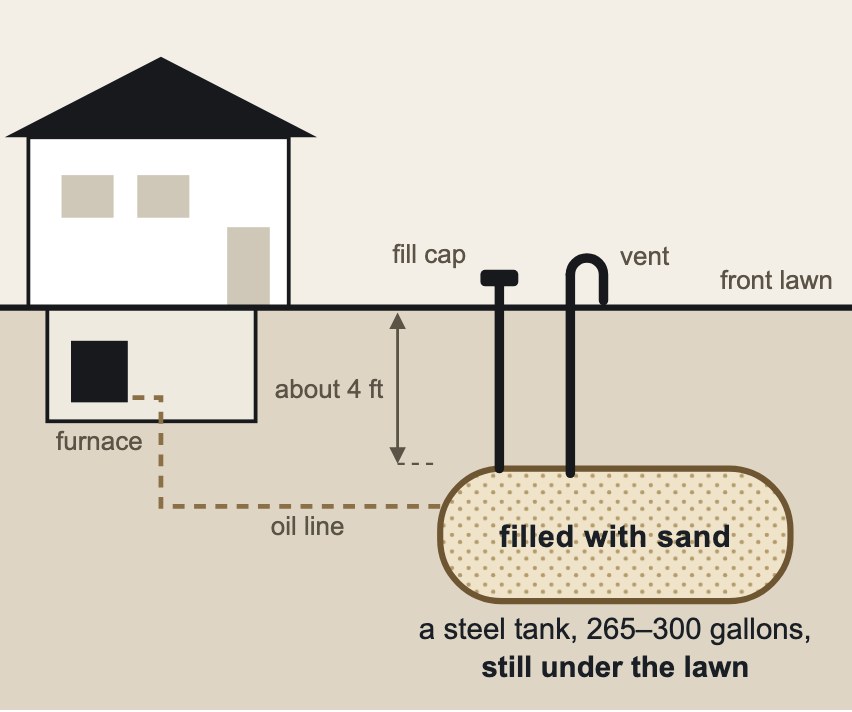
Probably. The City's residential underground-storage-tank records hold 50,143 decommissioning permits, and 11,944 of them — 24%, nearly one in four — record an abandonment in place: the tank was pumped out, cleaned, filled with sand or slurry and left in the ground. Another 35,126 took the old tank out and put a new one in, and only 3,049 record a removal with nothing put back. The permit says which one happened at your address, and the dossier prints it with its permit number, date, tank size and decommissioning method. If no permit was ever pulled, there is no record either way — which is worth knowing before you dig.
Is this a title report?
No, and it is not a substitute for one. It is every public record we can pull programmatically, organized and sourced. It is not a title search, a title insurance commitment, a legal opinion or a physical inspection, and it will not find a lien, claim or easement that is not in the records we query. Confirm anything you will rely on with the issuing agency or a title company.
What if a record cannot be fetched?
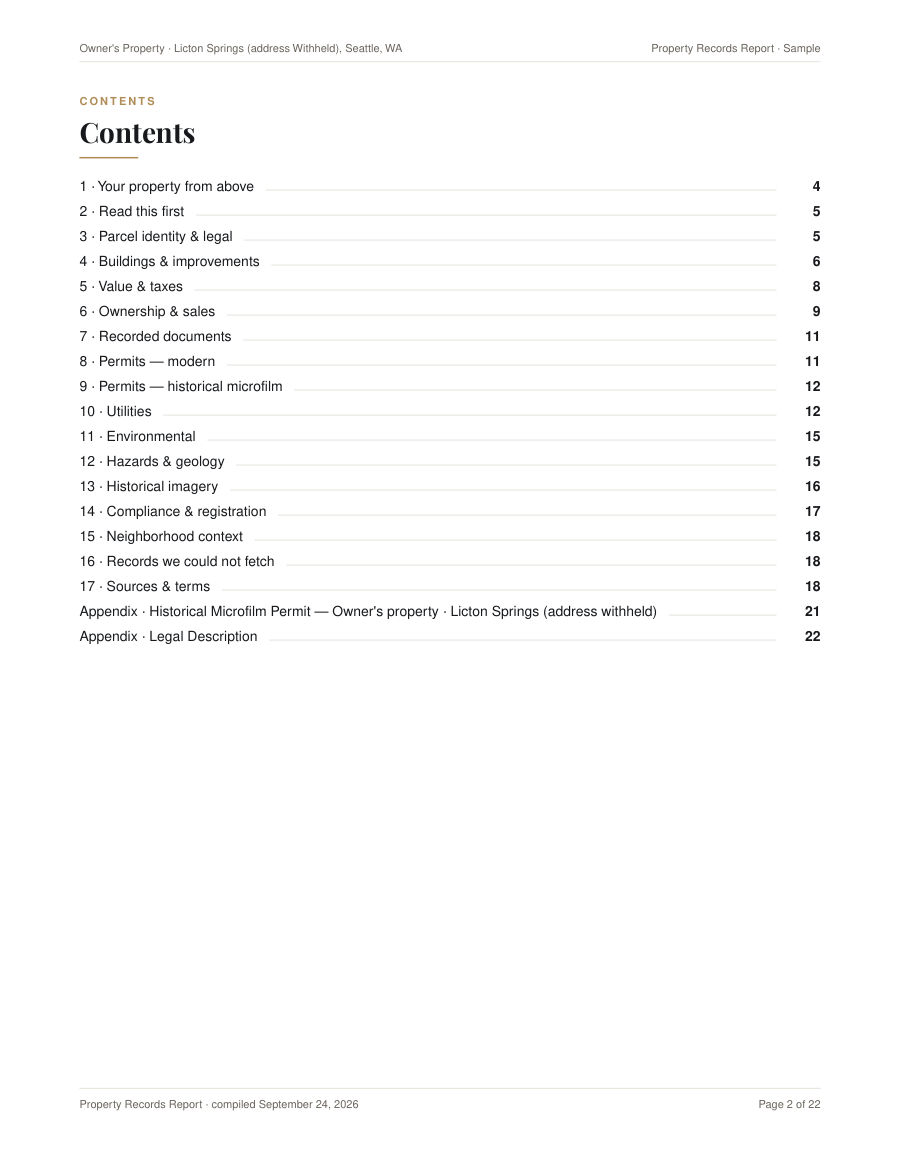
The dossier never leaves a chapter blank. The last chapter lists every source we could not retrieve, with the deep link, the department to request it from, and the exact record numbers to cite, so you can pull it yourself in minutes. Three are known handoffs: approved architectural plan sets (a written request to SDCI), the live tax balance (captcha-gated) and septic records (a records request).
Do I have to own the house?
No. These are public records for a Seattle address, so buyers doing due diligence before an offer, sellers preparing disclosures, and people who are simply curious about their own street can all order one. You will not be asked to prove anything, and we do not contact the owner.