
If you were hoping for another 2021 — bidding wars on every split-level, prices climbing a percent a month — the September numbers will disappoint you. If you own a Seattle lot and want to know whether to build, sell, or sit tight, they're more useful than any headline you'll read this week.
The short version: Seattle home prices have gone flat. The average Seattle home is worth $833,192, down 1.6% from a year ago, and the median home went to pending in just 17 days, according to Zillow's Seattle home values page. Rents, by contrast, are still inching up. And a 30-year fixed mortgage has been holding above 6.5% — its highest level in a year — per Zillow's August Market Report.
Put those three facts together and the Seattle housing market forecast for the rest of 2026 is not dramatic. Flat prices, steady rents, higher-for-longer rates. For a homeowner, that's not a reason to panic and it's not a reason to wait. It's a reason to run the numbers on the space you already own.
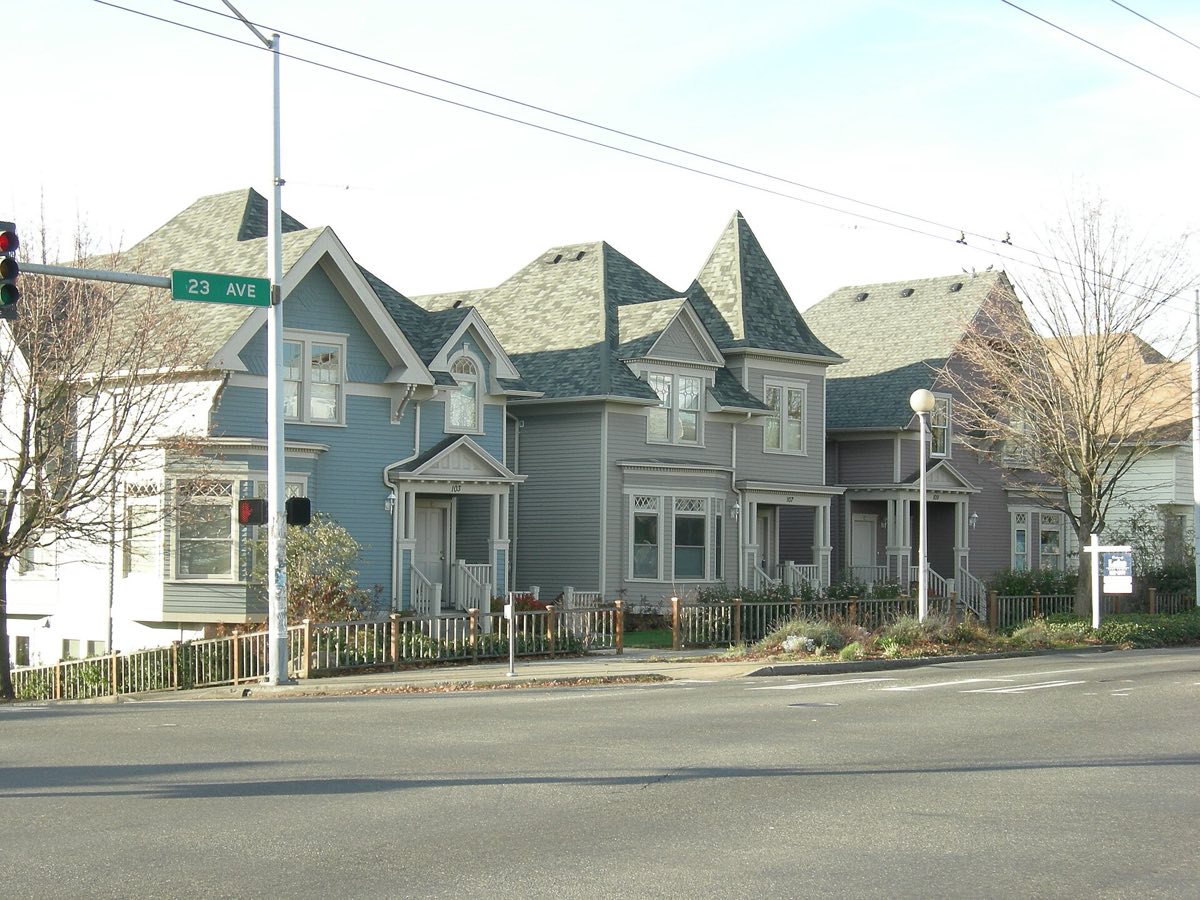
Here's my read of each piece of it, in plain terms.
Seattle prices: flat, not falling
Start with the number everybody quotes. Zillow puts the average Seattle home value at $833,192 as of August 31, 2026 — down 1.6% from a year earlier. The same page pegs the median sale price at $866,333 (July 2026) and the median list price at $724,967 (August 2026). Homes are taking a median of 17 days to go pending, and 2,771 homes were for sale at the end of August.
Two details in that stack matter more than the top line. First, the gap between the median list price ($725k) and the median sale price ($866k) tells you what's actually closing: the middle of the Seattle market is thinner than it looks, and the houses that sell are skewing bigger and pricier than the houses that are merely asking. Second, the sale-to-list ratio sits right at 1.000, with 31.3% of sales closing over list and 42.9% under list. In English: a good house, priced honestly, still gets bid up a little. A house priced like it's 2022 doesn't.
Source: Zillow Seattle home values, data through August 31, 2026.
None of this is a crash. The Seattle metro's typical home value was down 0.8% month over month in August and 1.6% year over year, per the same Zillow report — moving in the opposite direction of the country, where values rose 1.3% over the year. Seattle is underperforming the national market, but it's drifting, not diving.
The customized feasibility report measures what your own Seattle parcel may allow — zoning, setbacks, coverage, trees, critical areas, utilities and a permit path — from City and County records.
The top of the market is where the air came out
The flat middle hides a much softer top. The Seattle Times reported in early September that the top 5% of the market saw pending sales fall 15% year over year in the three months through July, even as luxury pending sales rose 2.6% nationally. In the six most expensive Seattle-area suburbs, homes priced over $2 million averaged 44 days on market in the first half of 2026 — up from 25 days in 2025 and just nine days in 2022, according to Windermere economist Jeff Tucker. The story points to a $2.9 million Sammamish listing sitting unsold after 100-plus days, the seller offering to help with financing. More of that coverage is on the paper's real estate section.
Why should a DADU builder care about the luxury end? Two reasons. One, the same article flags a new 9.9% "millionaires tax" — the first state income tax in modern Washington history — plus a 20% top estate-tax rate, and a capital-gains tax that has already pulled in $1.5 billion this year. That's a wealth story, not a cottage story, but it's quietly changing who buys at the top, and that eventually shows up in appraisals. Two, if you own a lot in a pricier neighborhood, the comps are getting shakier. Your $900k house is worth what the last honest sale says, not what the listing across the street is asking.
Rents are the quiet part of the story
While prices go sideways, rents keep climbing — slowly in Seattle, faster elsewhere. Zillow's August data puts the Seattle metro's typical rent at $2,278, up 1.7% from a year ago, and the city's average asking rent at $2,234. Nationally, rents rose 2.5% year over year to $1,948 — nearly double the pace of home-value growth. The for-sale market's pause is pushing people into rentals; Zillow's economists describe rents absorbing the demand that has shifted away from the for-sale side in their monthly research.
Source: Zillow August 2026 Market Report, Zillow Observed Rent Index.
This is the line that matters for a Seattle lot owner. Seattle ADU rental income doesn't depend on home values going up. It depends on rents — and rents are the one part of this report pointed in your favor. A one-bedroom cottage in Ballard or Wedgwood renting at $2,000 to $2,400 a month is real, recurring money against a flat house price. When the appreciation engine stalls, cash flow is what carries the decision. That's the quiet part most market summaries skip.
Rates above 6.5% decide more than the payment
Mortgage rates have been holding above 6.5% — the highest in a year — and Zillow blames them directly for the slowdown: national home sales fell 0.6% year over year in August, and newly pending listings fell 2.6%, a leading indicator of a soft close to the year. Redfin's data center tracks the same story at the metro level, where Seattle's pending sales tumbled more than any major market in July. Freddie Mac, which has surveyed the average 30-year fixed rate since 1971, publishes the weekly number on its PMMS page.
Rates change the math differently depending on which side of the transaction you're on. If you're asking "is now a good time to buy in Seattle," the honest answer is: the price is better than it was, but the payment isn't, because the rate is doing the damage. If you already own a lot with a low-rate mortgage, though, you're in a different position. You're not buying the land again — you're financing a $300k–$500k build on dirt you already own, and the rent from the new unit can offset a good chunk of the construction cost. The rate still matters, but it doesn't land on you the way it lands on a move-up buyer financing the whole price.
What this means if you own a Seattle lot
Four decisions, four answers.
- Thinking about selling? Don't rush, and don't wait for a boom. Prices are flat, and a well-priced house still moves in about 17 days. If you need to sell, price it honestly and move on.
- Thinking about buying? Negotiate. Sellers are cutting prices more (nationally, 26.3% of listings had a price cut in August), and under-list sales outnumber over-list ones. The rate is the problem, not the deal.
- Thinking about holding? That's fine. A flat year is not a loss if the house is where you live. But flat also means zero growth, so make sure holding costs aren't quietly eating the return. Start with your assessed value and tax picture at the King County Assessor.
- Thinking about building? This is the strongest case of the four. Rents are up, prices are flat, and your lot isn't appreciating on its own. Adding a DADU turns idle backyard into rent.
That last one is where the September numbers actually point. A flat housing market is a poor time to speculate and a fine time to build — because the build's payoff is rent, not appreciation.
Years ago I'd have told you to sell into a market like this. Now I'd tell you to keep the lot and let it pay you rent. Prices are flat — but a rent check still cashes.
— Bob Hall, retired Seattle builderSeattle middle housing and the ADU permit path
The city's policy machinery is still moving in the direction that favors smaller units. In early September, Seattle's Office of Planning and Community Development announced $7.4 million in community-led anti-displacement building awards through its Equitable Development Initiative — Seattle middle housing and anti-displacement money going to work at the neighborhood level. For a single lot owner, the practical version is simpler: the city has spent years making it easier to permit a second unit, not harder.
If you're serious about a DADU, start with the feasibility screen before any plan or contractor. Can I build a DADU in Seattle? runs the checklist. Then look at Seattle's pre-approved DADU standard plans, which can cut permit time to a few weeks on an eligible lot. And run the neighborhood-specific numbers — the neighborhood feasibility pages show how lots, trees, and hazards differ block by block, from Ballard's alley access to Wedgwood's big lots and West Seattle Junction's consistent mid-size parcels. When you're ready for the whole picture, generate a feasibility report for your specific lot before you spend a dollar on design.
The free Seattle DADU Pro Guide walks the 2026 rules and the lot-specific checks — so you know what your backyard can earn before you spend on plans.
Frequently asked questions
Are Seattle home prices going up or down in September 2026?
Flat to slightly down. Zillow put the average Seattle home value at $833,192 as of August 31, 2026, down 1.6% from a year earlier, with the median home going to pending in about 17 days. It's a drift, not a crash.
Is now a good time to buy a house in Seattle?
The price side is better than it was, but the financing side is not. With the 30-year fixed rate above 6.5%, the monthly payment is the problem rather than the deal. Sellers are cutting prices more, and more homes sell under list than over, so buyers have room to negotiate.
What is the Seattle housing market forecast for the rest of 2026?
Flat home values, a softer luxury end, steady-to-rising rents, and rates above 6.5%. Zillow's August Market Report described a soft close to 2026, with sales down 0.6% year over year nationally and newly pending listings down 2.6%.
Can a Seattle DADU still pay for itself when home prices are flat?
Yes, because DADU economics depend on rent, not appreciation. The Seattle metro typical rent was $2,278 in August 2026, up 1.7% year over year, while home values went flat. A cottage renting for $2,000 to $2,400 a month can cover construction debt even with no gain in the house's value. Start with a feasibility screen of the specific lot.
Keep reading. If flat prices have you looking at the back of the lot, start with the year-by-year Seattle DADU payback math and the line-by-line Seattle DADU cost breakdown. If it is your tax bill that moved instead, see why a Seattle bill rises when values fall.
This article is educational and preliminary. It is not financial advice, legal advice, or a prediction of future home values. Market figures come from the sources linked above and reflect the latest data available at the time of writing. Zoning, permit, and tax rules can change. Verify current rules with SDCI, SPU, and the King County Assessor before making any financial, design, permitting, or construction decision.