
Ask three Seattle builders what a DADU costs and you will get three numbers, all of them lower than the check you actually write.
A Seattle DADU costs $400–$650 per square foot all-in in 2026, so a 1,000-square-foot backyard cottage lands between $400,000 and $650,000 — design, permits, construction, utilities, site work and contingency together. That is the turnkey band Seattle DADU builders published for 2025–2026, and it is the number to budget against.
This site splits that figure up, because it prices your parcel's permits, studies and site prep line by line: $420–$616 per square foot to design and build ($420,000 to $616,000 at 1,000 square feet, midpoint about $518,000), plus the fee stack below. The two add back to the builders' number; nothing is counted twice. The honest answer is longer, because the number on your lot is set by line items that do not show up in the square-foot quote.
I have built these around Seattle for years, and I have watched the same few items blow up budgets on flat lots and steep lots alike. Here is the line-by-line way I priced a cottage.
Builders quote construction. The City, the County, and Seattle Public Utilities bill the rest. Your lot decides which of those bills are big — so find out what your lot is before you price the building.
What a Seattle DADU cost actually breaks into
When I priced a cottage for a homeowner, I put every dollar into one of four buckets.
Hard costs are the building itself — excavation, foundation, framing, siding, roofing, windows, plumbing, electrical, heat, drywall, and finishes. Soft costs are the survey, design, and the reports your lot may force. Government fees are what the City, the County, and SPU bill. The fourth is the one nobody writes down: the site-specific line items that turn a clean quote into a real budget.
The rule I kept: construction is the part every builder quotes, and it is roughly the same from lot to lot. The other three buckets are where two identical cottages can end up $50,000 apart.
The trench length, the panel, the trees, the slope, the side sewer. The customized report prices those lines against your own parcel from City and County records instead of a citywide average.
Hard costs: the number builders quote, and what it leaves out
Read a builder's per-square-foot number carefully: the published ones are turnkey. Ballard Backyard Cottages states an “average 2025/2026 cost per square foot (all-in): $400–$650” covering design and plans, permitting and fees, construction, utilities, landscaping and site work, and contingencies, and puts a 1,000-square-foot unit at $375,000 to $550,000 typical. Emerald City Construction quotes “between $500 and $700” a foot and an 800-square-foot DADU at $400,000 to $560,000. Maksymov Brownstone quotes $400 to $650 a foot for construction, with design at “5–15% of construction” and a total project “$300,000 to $600,000 all-in”. So: this site's $420–$616 band is the design-and-build share, not a second, higher number — $375 to $550 of hard construction plus 12% for design, engineering and contractor overhead, with the fees below priced for your actual parcel instead of averaged in. Adding them back lands inside the builders' $400–$650.
The range is wide for a reason: a compact 450-square-foot cottage carries a higher cost per square foot than a 1,000-square-foot build, because the expensive parts — a kitchen, a bath, a foundation, a service panel — do not shrink in proportion.
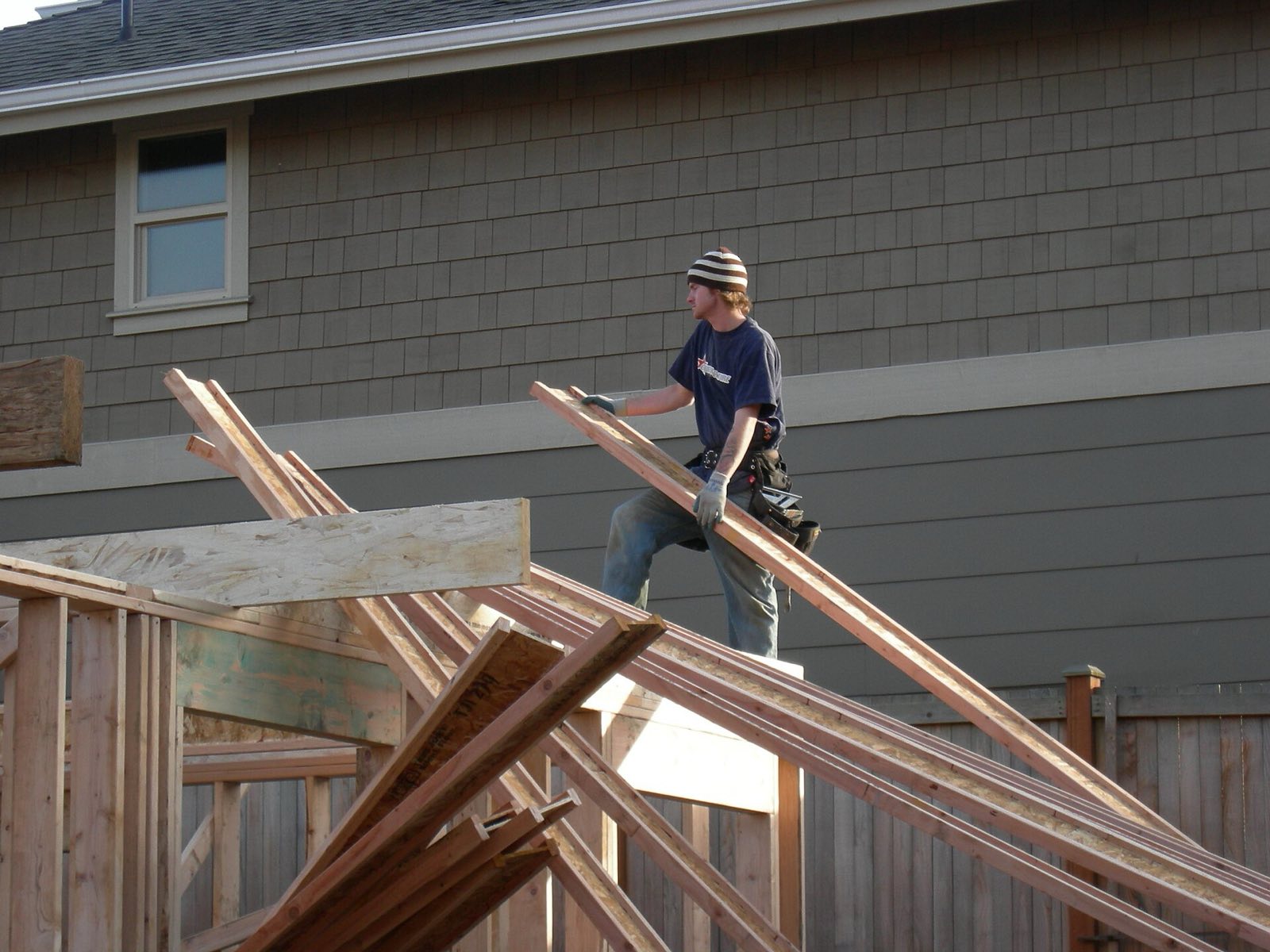
Square-foot quotes cover the building, not the survey, the permits, the sewer work, or the electrical upgrade. That gap is where homeowner budgets die.
Soft costs: survey, design, and the reports your lot may force
These come before anyone swings a hammer, and there is no lumber receipt attached.
- Boundary and topographic survey — $1,500 to $4,000. Seattle parcel lines are not accurate to the inch, and setbacks are measured from the surveyed line. You cannot file a site plan without one.
- Design and plans — the number swings with the path you take. A pre-approved standard plan licenses for roughly $1,000; a custom architect can run five to ten times that before engineering.
- Arborist report — $400 to $1,200 if a regulated tree sits near the footprint. Under Seattle's tree rules a Tier 2 tree (24 inches or larger) is removable only as part of the development permit (SMC 25.11.070.A.1) with replacement or a payment in lieu, so the tree usually decides where the building sits.
- Geotechnical report — $2,500 to $5,000, but only if the lot carries a slope or landslide designation. A hazard-free lot usually skips it.
On a flat, clean lot the soft-cost stack might be $15,000; on a sloped lot with a big cedar in the corner, the same list is $20,000 before the engineered foundation.
The customized feasibility report measures your alley, slope, trees, sewer, and panel — the inputs that set these numbers — for your address.
Government fees: what the City, the County, and SPU bill
These come from published rate tables and worked examples.
SDCI plan review and permit. Seattle anchors its fee schedule with worked examples, and it resets them every January — construction-permit fees rose 18 percent year over year in 2026. The 2026 example for a 500-square-foot detached accessory dwelling unit is $3,453 for plan review plus the permit, with 75 percent due at application and the balance before issue. A full 1,000-square-foot cottage scales toward roughly $4,400 to $5,900 — my interpolation between SDCI’s two published examples, not a published figure, so confirm it in the SDCI fee estimator before you budget on it.
Trade permits. Electrical, mechanical, and plumbing permits run roughly $850 to $2,200 combined for a two-bath cottage.
Seattle levies no school or growth-management impact fee, and state law caps any ADU impact fee at half the principal-unit fee (RCW 36.70A.681). No owner-occupancy or parking is required.
SPU side sewer and drainage. A Water, Drainage, and Wastewater Availability Certificate is usually required, and SPU calculates the side sewer and drainage system development charge per project — plan on $3,000 to $8,000 for the connection and permit.
King County sewer capacity charge. This one hides for a year, then shows up on a bill. The county charges $77.99 per residential customer equivalent per month for 15 years, and a DADU is 0.59 RCE. That works out to $46.01 a month — about $552 a year, and roughly $8,283 over the full term. You can prepay the balance at a discount.
Seattle City Light. There is no flat ADU connection fee published; you either sub-panel off the house or take a separate service. File the Electric Service Request early — the answer changes the trench and the panel.
The hidden line items that move the number on your lot
These are the four that turn a $400,000 quote into a $460,000 project, and every one is knowable before you sign anything.
- Side sewer replacement. Houses built before 1945 often sit on original clay or concrete side sewers. A camera inspection that shows root intrusion or offset joints can reset the utility budget by $10,000 to $25,000 on its own.
- 200-amp service. Older houses run 100-amp panels. A second all-electric dwelling usually needs a 200-amp service or a separate meter — $6,000 to $15,000, more if the feed is underground.
- Tree protection. A protected tree next to the footprint means tree-protection fencing, an arborist, and sometimes a shifted foundation, not a free chainsaw. Budget $400 to $1,200 for the report and $300 to $1,000 for the fencing.
- A long utility trench. Sewer, water, and power trenching runs $45 to $110 a foot. A cottage that backs onto an alley connects in 30 feet. A rear-yard cottage on a deep interior lot can run a 90-to-100-foot trench past the house — a five-figure line item for the same building.
Three lots, same 1,000 sq ft cottage
Planning estimates — how the site line items move the total before a single board is cut.
| Line item | Flat alley lot | Interior, no alley | Slope lot |
|---|---|---|---|
| Construction (ink) | $400,000 | $408,000 | $440,000 |
| Soft costs (bronze) | $15,000 | $15,000 | $20,000 |
| Permits & fees (green) | $13,000 | $13,000 | $15,000 |
| Site & utilities (light) | $3,000 | $17,000 | $17,000 |
| Total | $431,000 | $453,000 | $492,000 |
Planning estimates, not quotes. Construction at the $420–$616/sq ft design-and-build band; SDCI fees scaled from the 2026 Fee Summary worked example ($3,453 for a 500 sq ft DADU, effective 2026-01-01); SPU and King County figures from 2026 published rate tables. Your lot's survey, permits, and bids will move these.
Alley, slope, and the garage you already have
The building does not change; the site does, and three things on your parcel do most of it.
Alley or not. A rear lot line on a platted alley gets a 0-foot rear setback under SMC 23.42.022, plus a short sewer run and a second construction route. No alley means a 5-foot setback, a long trench past the house, and materials hand-carried down a side yard. That one difference can be worth $20,000.
Slope. Mapped steep-slope or landslide ground disqualifies the pre-approved plan path and adds a geotechnical report and an engineered foundation — the slope column above runs about $40,000 more in construction than the flat alley lot.
The existing garage. A garage that predates July 23, 2023 can often be converted to a DADU even if it violates current setback or coverage limits, skipping the most expensive line item — a new foundation and shell. If you have an old garage, price the conversion before a new build.
These conditions cluster by neighborhood. Ballard's alley grid shortens sewer runs; Wedgwood's deep interior lots stretch them; Queen Anne's slopes drive foundations. The neighborhood profiles show the measured patterns behind each one.
If you want the number that applies to your address, the customized feasibility report measures this for your address — alley, slope, trees, sewer main, panel, and the buildable rectangle — and turns it into a budget range. The free homeowner checklist covers the same ground if you prefer to screen it yourself first.
What you pay every year after move-in
The closeout check is not the last one. Three bills keep arriving after the tenant does.
Property tax is the big one. King County revalues every parcel annually, and the DADU's value lands on the next roll. At Seattle's levy code 0010 rate of $9.90845 per $1,000 — about 0.99 percent — a cottage that adds $450,000 of assessed value adds roughly $4,460 a year.
King County capacity charge keeps billing for 15 years: $46.01 a month, about $552 a year, unless you prepay.
SPU drainage is a flat per-parcel fee billed on the property tax statement. A 2,000-to-3,499-square-foot parcel pays $469.52 a year in 2026; a 6,500-to-9,999-square-foot parcel pays $976.13. Adding a DADU under 10,000 square feet does not change the tier, but it is part of the carrying cost.
Recurring cost after move-in, per year
Annual dollars — the property tax is the line that dwarfs the rest.
Property tax assumes roughly $450,000 of added assessed value at Seattle levy code 0010 ($9.90845 per $1,000, about 0.99%). Capacity charge = $77.99/RCE/month × 0.59 RCE, billed 15 years (≈$8,283 total). SPU drainage tier depends on parcel size; adding a DADU under 10,000 sq ft does not change the tier.
The point is not to scare you off a cottage. It is to make the number predictable, because most of the variance on a Seattle DADU cost is knowable before you spend a dollar on design.
The cheapest money you will spend on the whole project
The free Pro Guide walks you through the lot conditions behind these numbers, and the feasibility report measures them for your address. Either one is a rounding error next to a $20,000 trench surprise.
Get the Seattle DADU Pro Guide to work through these line items on your own lot before you hire anyone.
Frequently asked questions
How much does a DADU cost to build in Seattle in 2026?
Seattle DADU builders publish $400–$650 per square foot turnkey — design, permits, construction, utilities and site work together — so a 1,000-square-foot cottage runs $400,000 to $650,000. This site splits it: $420–$616 per square foot to design and build ($420,000 to $616,000 at 1,000 square feet, midpoint about $518,000), being $375–$550 of hard construction plus 12% soft costs, with your parcel's permits, studies and site prep priced separately. Ballard Backyard Cottages publishes “$400–$650” all-in; Emerald City Construction “between $500 and $700” per square foot.
What government fees and recurring charges apply to a Seattle DADU?
One-time items include the SDCI plan review and permit fee (SDCI’s 2026 Fee Summary worked example is $3,453 for a 500 sq ft DADU), trade permits, and SPU side sewer and drainage system development charges. Recurring items include the King County sewer capacity charge ($77.99 per RCE per month for 15 years; a DADU is 0.59 RCE), the SPU drainage fee, and higher property tax.
Why does the same DADU cost different amounts on different Seattle lots?
Construction is the constant. The site is the variable. An alley allows a 0 ft rear setback and a short sewer run. An interior lot with no alley needs a longer trench and often a 200-amp upgrade. A slope adds a geotechnical report and an engineered foundation. An old side sewer can reset the utility budget by $10,000 to $25,000 on its own.
How can I get an exact Seattle DADU cost for my own lot?
The exact number depends on your alley status, slope, trees, side sewer, and electrical panel. A lot-specific feasibility report measures those conditions for your address and turns them into a budget range before you spend on design or permits.
Keep reading. Once you have the budget, the next question is what it earns back: the year-by-year Seattle DADU payback math and what a Seattle DADU actually rents for. For the fee side in isolation, the Seattle DADU permit guide walks the SDCI schedule and the trade permits.
This article is educational and preliminary. It is not legal advice, architectural advice, engineering advice, surveying advice, an official cost estimate, or an official determination by the City of Seattle or King County. Fees and rates change. Verify all figures against current SDCI, SPU, King County, and Seattle City Light schedules at the time of your application, and get written bids from licensed contractors before making financial decisions.